hire companies
IPAF urges contractors to consult MEWP hirers before imposing secondary guarding rules
The International Powered Access Federation has told contractors to involve rental companies early and allow a reasonable lead-in period before making secondary guarding or other add-on equipment mandatory on site.
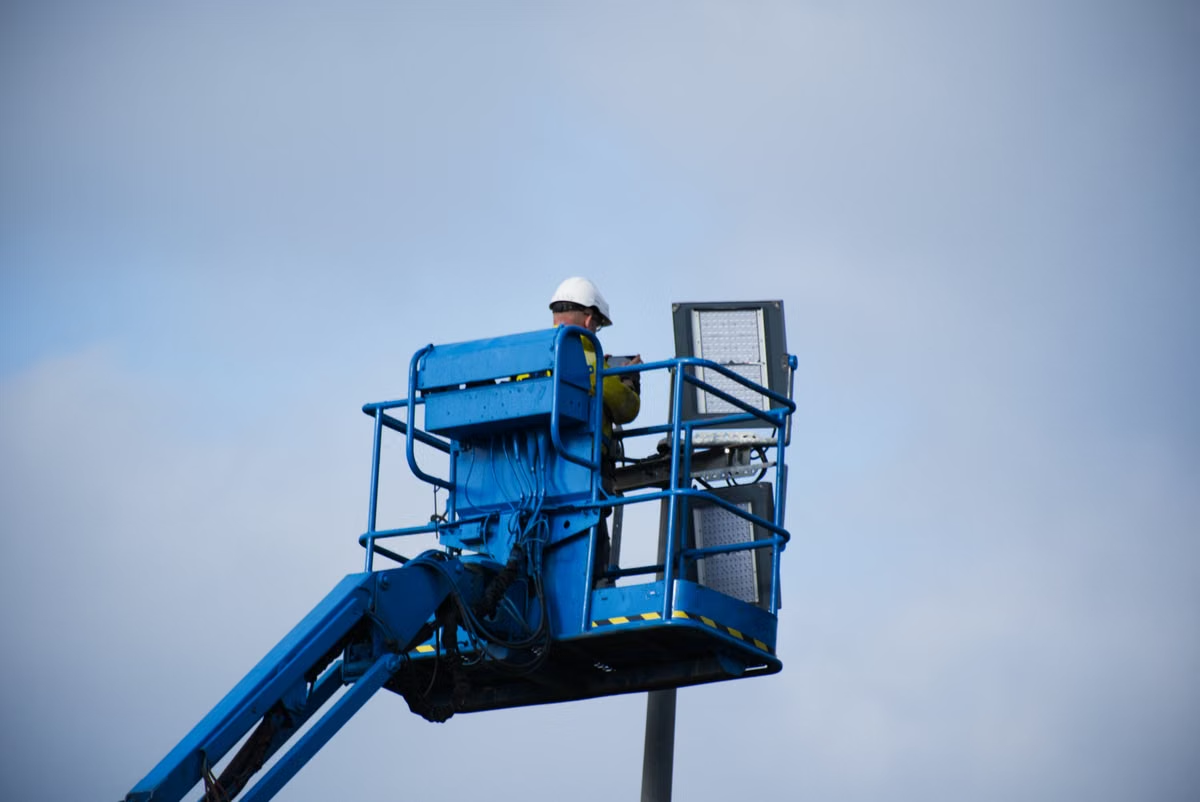
The International Powered Access Federation (IPAF) has told contractors to consult rental companies and other mobile elevating work platform (MEWP) suppliers at the earliest possible stage before introducing new site requirements for secondary guarding.
The statement, dated 12 November 2026 and published by the Access Industry Forum, asks contractors to provide a reasonable implementation period before any new equipment or site-entry requirement becomes mandatory.
IPAF said it fully supports initiatives to improve the safety of people using MEWPs, including measures to reduce the risk of entrapment and crushing. But it said new site requirements for secondary guarding or other devices fitted to MEWPs need careful planning and early communication across the supply chain.
The hire fleet burden
According to IPAF, rental companies and suppliers need enough time to understand what is being proposed, assess the machines in their fleets, decide which systems suit different machine types and applications, and source the equipment.
Suppliers must also be able to assess and budget for procurement and implementation costs, and plan installation across their fleets where needed, the federation said.
IPAF said requirements introduced at short notice can create significant practical and financial challenges, particularly where large numbers of machines are affected. It listed equipment availability, manufacturer guidance, installation capacity, costs and the time needed to modify individual machines as factors that must all be considered.
Sufficient lead time, IPAF said, helps safety measures to be introduced without putting unnecessary pressure on equipment availability or compromising the quality and consistency of implementation.
The federation said its position remains that secondary guarding should form part of an appropriate risk-management approach that takes account of the MEWP, the task, the working environment and the foreseeable entrapment risks.
Second statement this year
The new statement directs contractors and suppliers to IPAF's earlier statement on a secondary guarding mandate for scissor lifts, issued on 28 January 2026.
In that statement IPAF said it was aware that some UK Tier 1 contractors intended to introduce secondary guarding requirements from January 2026. It said it was not currently advocating mandatory adoption of specific systems by contractors ahead of completion of a draft ISO standard, and that internationally agreed standards are essential to provide clarity for original equipment manufacturers (OEMs).
IPAF also said in January that no single secondary guarding system protects against all known entrapment situations, and that, in line with the Health and Safety Executive (HSE), secondary guarding must not be treated as a substitute for good planning, competent supervision and vigilant operators. It advised its members at the time to engage early with clients and contractors to clarify expectations.
The named contact for the secondary guarding statement is Brian Parker, IPAF Head of Safety & Technical.
Guidance and research
The HSE's safety bulletin FOD 3-2014, issued in May 2014, says that where a secondary guarding device is required it should be selected for the specific application and its limitations understood by users. The bulletin adds that covers or shrouds for machine controls should not be relied on to reduce the risk of entrapment or crushing more generally.
HSE research report RR1180, published in 2022, identifies pressure sensing devices and physical barriers creating a protected zone as the two most common types of secondary guarding device. The researchers analysed 58 entrapment incidents to build and validate incident scenarios. The HSE's page for the report says that, as of 2022, there was no common standard to assess the performance of such devices.
That research fed into industry good practice guidance on reducing trapping and crushing injuries in MEWPs, published in 2023 by the Construction Industry Plant Safety Group (CIPSG), which is chaired by the Construction Plant-hire Association, in partnership with IPAF. According to the guidance, IPAF's reporting portal data from 15 countries recorded 73 deaths in entrapment incidents globally between 2016 and 2020.
Brian Parker, Head of Safety & Technical at IPAF, said of that guidance at the time: "This updated guidance has taken a while to develop, but it was much-needed."
IPAF describes itself as a not-for-profit organisation owned by its members, who include manufacturers, rental companies, contractors and users. More than 180,000 operators are trained each year through over 750 IPAF-approved training centres.
The Access Industry Forum, which published the statement, was established in 2004 as the forum for the ten principal trade associations and federations involved in work at height.
Sources
- IPAF (International Powered Access Federation) (opens in a new tab) (accessed 2026-11-16)
- The Access Industry Forum (opens in a new tab) (accessed 2026-11-16)
- The Access Industry Forum (opens in a new tab) (accessed 2026-11-16)
- The Access Industry Forum (opens in a new tab) (accessed 2026-11-16)
- The Access Industry Forum (opens in a new tab) (accessed 2026-11-16)
- The Access Industry Forum (opens in a new tab) (accessed 2026-11-16)
- Health and Safety Executive (opens in a new tab) (accessed 2026-11-16)
- Health and Safety Executive (opens in a new tab) (accessed 2026-11-16)
This story was researched from the primary sources above and checked against them before publication. Spotted an error? Tell us and we will correct it promptly.