hire companies
CPA opposes per-mile electric vehicle tax and proposes VED alternative for commercial fleets
The Construction Plant-hire Association says it backs a long-term funding model but rejects mileage-based taxation of electric vehicles and the precedent it could set for other vehicle types.
The Construction Plant-hire Association (CPA) has objected to the government's planned per-mile tax on electric vehicles, saying it would prefer an alternative based on Vehicle Excise Duty for commercial fleets.
The trade body has responded to the consultation on electric vehicle excise duty (eVED), a per-mile taxation framework introduced to offset declining fuel duty revenues.
The CPA said it supports the need for a sustainable long-term funding model. But it opposes a mileage-based approach, and the precedent it says this would set for other vehicle types.
Instead, the association has proposed an alternative through VED, which it said is designed to be simpler and fairer for commercial fleets.
The government's proposal
HM Treasury ran the eVED consultation for 16 weeks from 26 November 2025, closing at 23:59 on 18 March 2026. According to the government's published outcome, it received 5,133 responses, 92% of them from individuals.
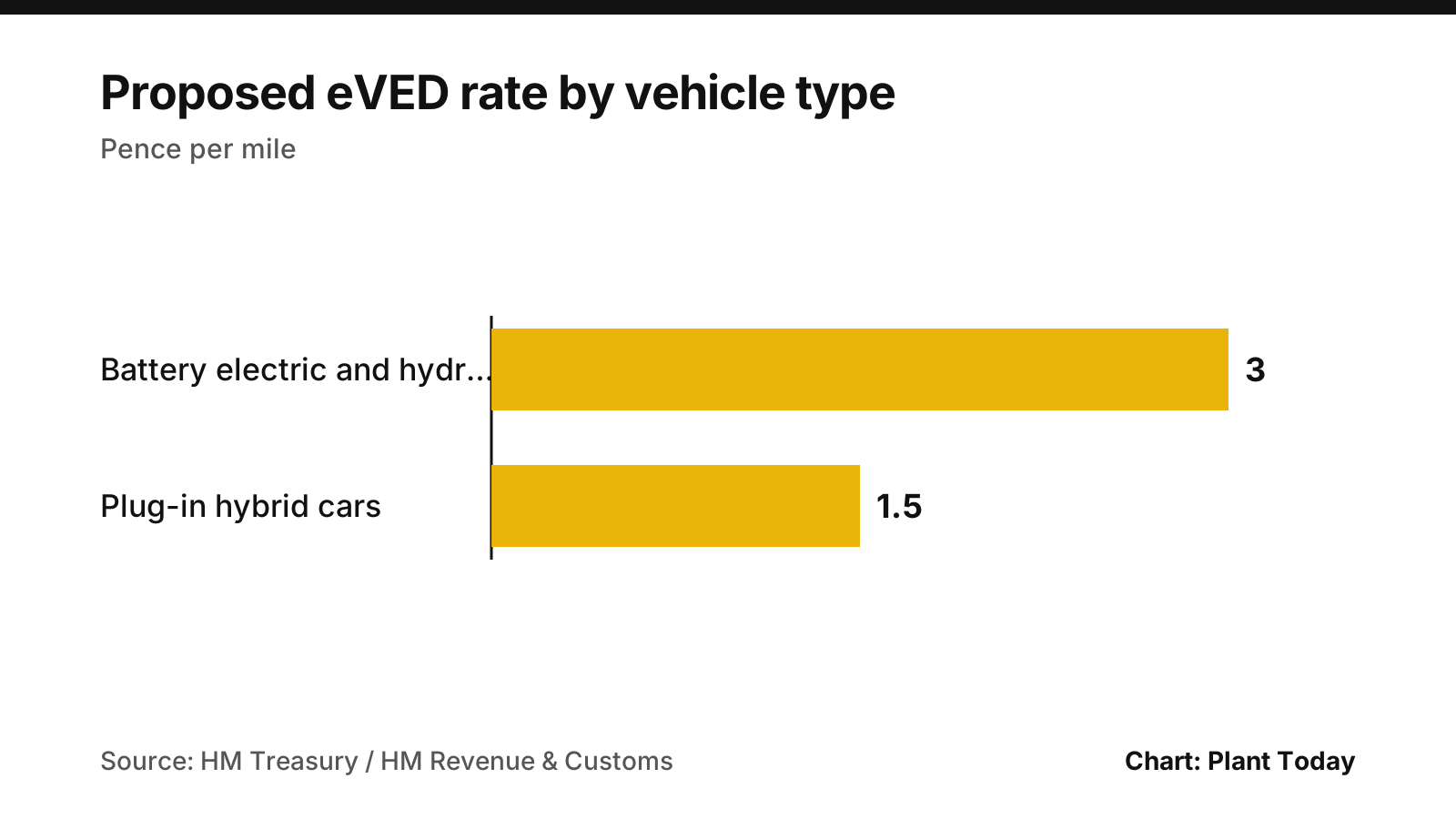
The Treasury proposed a rate of 3 pence per mile for fully electric cars. Plug-in hybrid cars would pay a reduced rate of 1.5 pence per mile when the duty is introduced in April 2028.
| Vehicle type | eVED rate |
|---|---|
| Battery electric and hydrogen fuel cell cars | 3p per mile |
| Plug-in hybrid cars | 1.5p per mile |
The government's policy paper, published by HM Revenue & Customs and HM Treasury, confirms the change will take effect from 1 April 2028 and sets the same rates: 3 pence per mile for battery electric and hydrogen fuel cell cars, and 1.5 pence per mile for plug-in hybrids. It expects the measure to affect about 5.6 million vehicles in the 2028-29 financial year.
Under the proposal, drivers would give an estimate of their mileage in advance. At the end of the VED period, a user-supplied mileage reading would be reconciled against that estimate. The government said there would be no requirement to report where and when miles are driven, or to install trackers in cars.
Why the Treasury is acting
The consultation document cites the Office for Budget Responsibility (OBR) forecast that fuel duty revenues, about £24bn in 2024-25, will fall to around half current levels as drivers switch away from petrol and diesel.
The policy paper also says the OBR estimates that the combined impact of eVED and related Budget measures would reduce electric vehicle sales by around 120,000 between the 2025-26 and 2030-31 financial years.
What happens next
The CPA has published its full response on its website. The association has not said in its announcement how its VED-based alternative would be structured.
The government said in its consultation response that it will give a further update by the end of the year on plans for opt-in eVED functionality using in-built vehicle connectivity.
eVED takes effect from 1 April 2028.
Sources
- Construction Plant-hire Association (CPA) (opens in a new tab) (accessed 2026-10-13)
- HM Treasury (GOV.UK) (opens in a new tab) (accessed 2026-10-13)
- HM Treasury (GOV.UK) (opens in a new tab) (accessed 2026-10-13)
- HM Revenue & Customs / HM Treasury (GOV.UK) (opens in a new tab) (accessed 2026-10-13)
This story was researched from the primary sources above and checked against them before publication. Spotted an error? Tell us and we will correct it promptly.